
How to Wake Up Easier
Each sleep cycle runs about 90 minutes. Wake at the end of one and the morning is survivable.
Hannah Cho
Have you ever wondered why some mornings you wake up refreshed, while other days you feel like you barely slept? The answer lies in your sleep cycle. When you sleep, your body moves through different stages: light sleep, deep sleep, and REM sleep. Each full cycle lasts about 90 minutes. Waking up during light sleep makes you feel alert, but waking up during deep sleep can leave you tired and confused.
This is why going to bed and waking up at consistent times is so important. It helps your body predict when to enter deep sleep and when to stay lighter toward morning. A steady routine trains your internal clock and can make mornings feel less painful.
Tips to Wake Up More Easily
- Try to wake up at the end of a 90-minute cycle. For example, if you sleep at 11:00 PM, aim for 6, 7.5, or 9 hours. This helps you avoid waking up in the middle of deep sleep.
- Keep a consistent sleep schedule. Even on weekends, try not to shift by more than 1 hour. Your body loves routine.
- Avoid screens 30–60 minutes before bed. The blue light tricks your brain into thinking it's daytime and makes falling asleep harder.
- Use light to your advantage. In the morning, open your curtains or turn on a bright light right away. Light tells your brain, "It's time to wake up."
- Prepare the night before. Lay out your clothes, pack your school bag, and clean your desk. A smoother morning reduces stress and helps you get up quicker.
- Put your alarm across the room. This forces you to stand up, which makes it harder to fall back asleep.
- Drink water as soon as you wake up. Hydration helps your brain switch on and boosts your energy.
Letters
Say something about this story. No account needed. Leave a name or stay anonymous, and you can delete anything you post from this browser.
Related Stories
How Dreams Affect How Deep We Feel We Sleep
Brain-wave activity does not match the feeling of deep sleep. The dream does.
Hyunji Song/Mar 2026
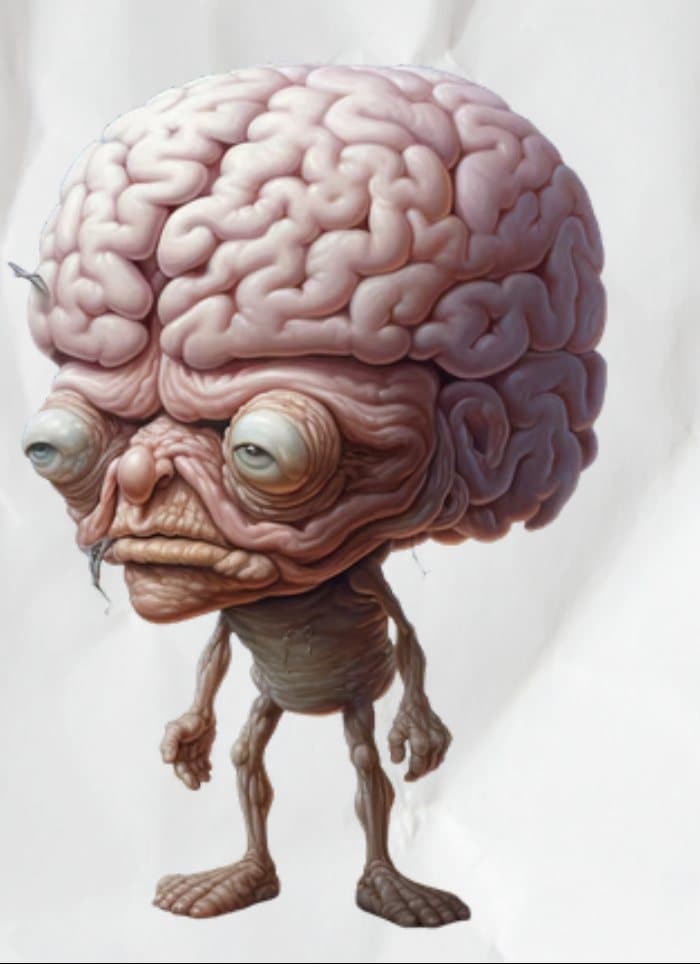
Neuroscience: Understanding the Human Brain
Billions of neurons, electrical and chemical signals, and what studying them may teach us about being human.
Yebynn Son/Sep 2026
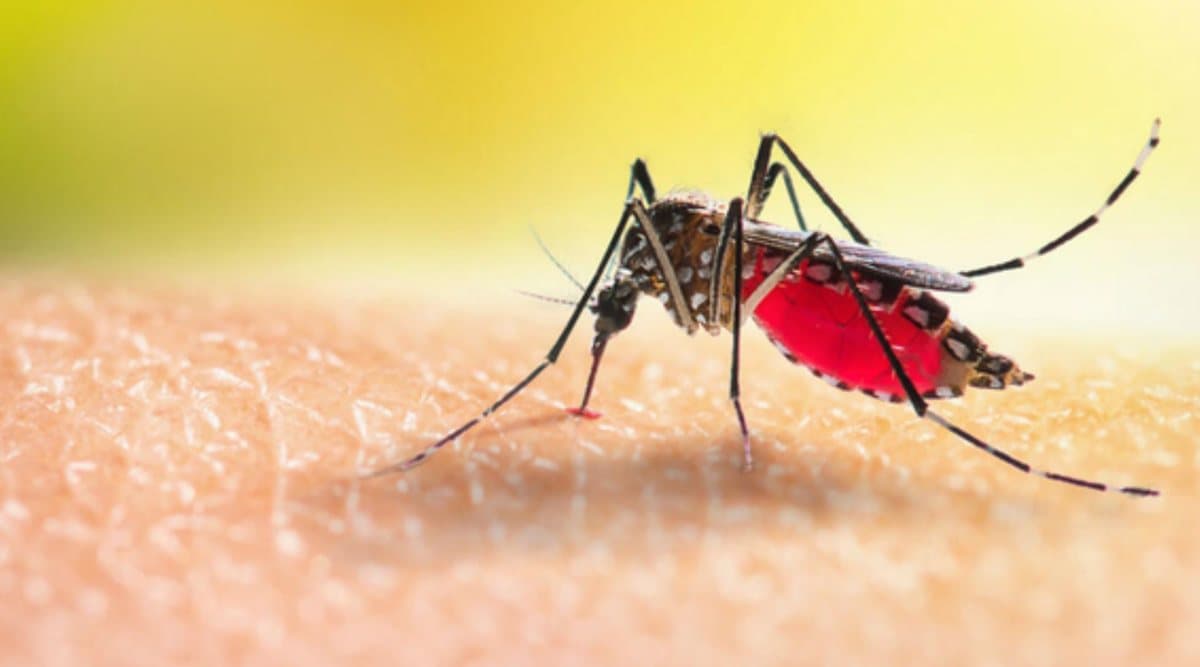
More Than Just a Summer Nuisance
Why only females bite, why the bite itches, and why mosquito prevention is a small part of protecting community health.
Yena Seo/Sep 2026
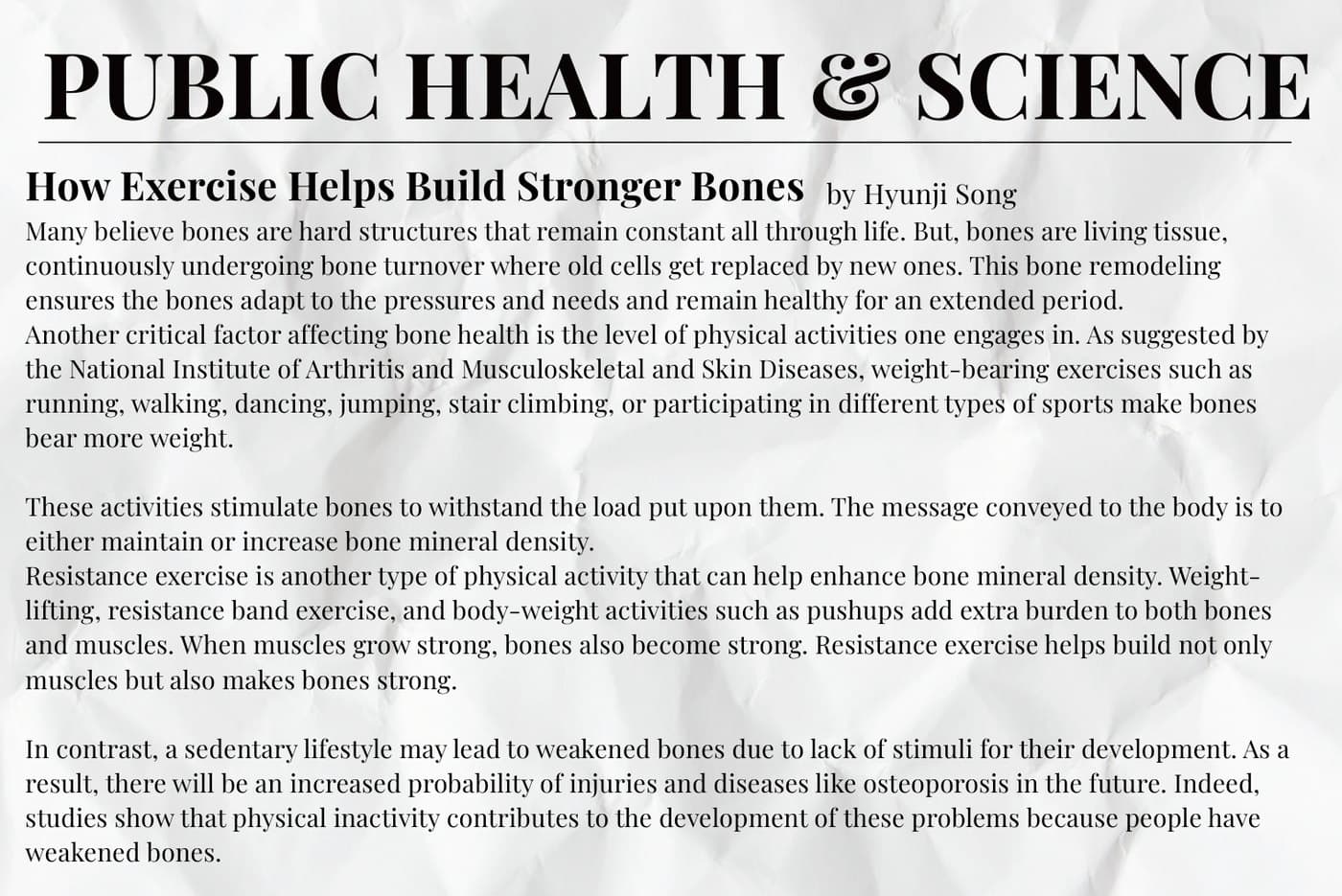
How Exercise Helps Build Stronger Bones
Bone is living tissue. Three sessions a week at a decent intensity, and it remodels itself around the load.
Hyunji Song/Jun 2026
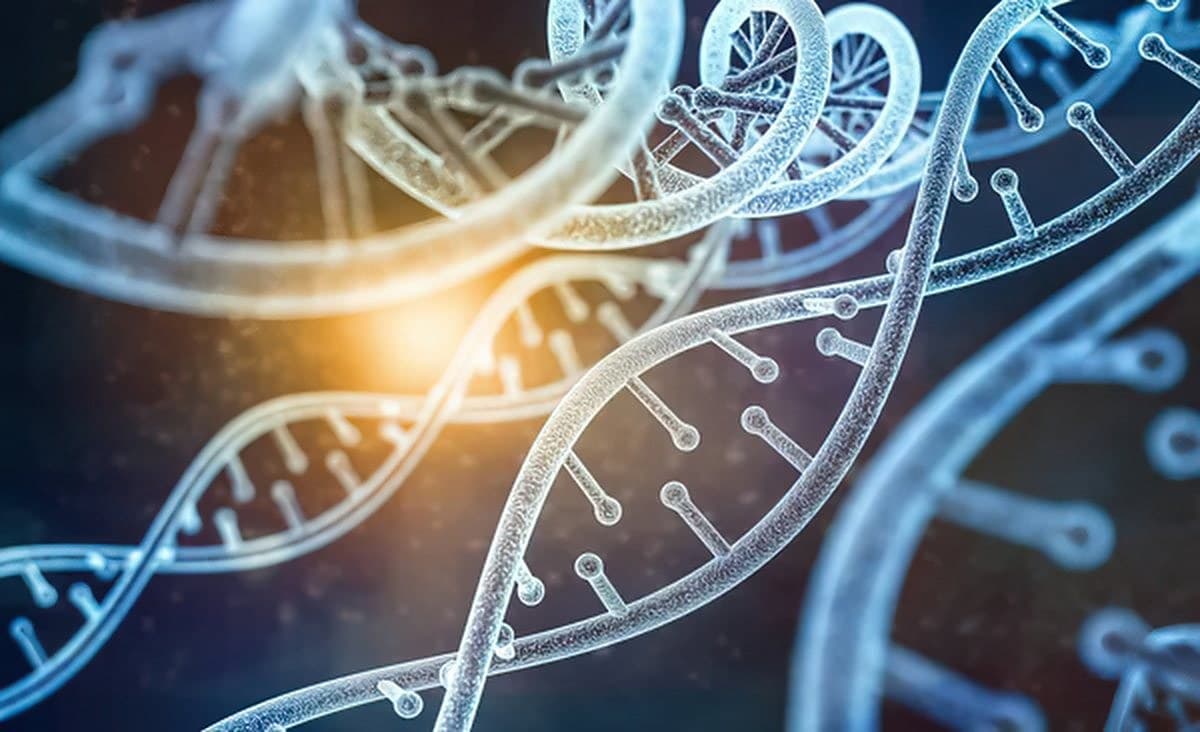
How to: Fix Yourself
CRISPR is a molecular scissor. It won a Nobel in 2020, treated sickle cell in 2023, and edited embryos in 2018.
Hayeon Son/May 2026
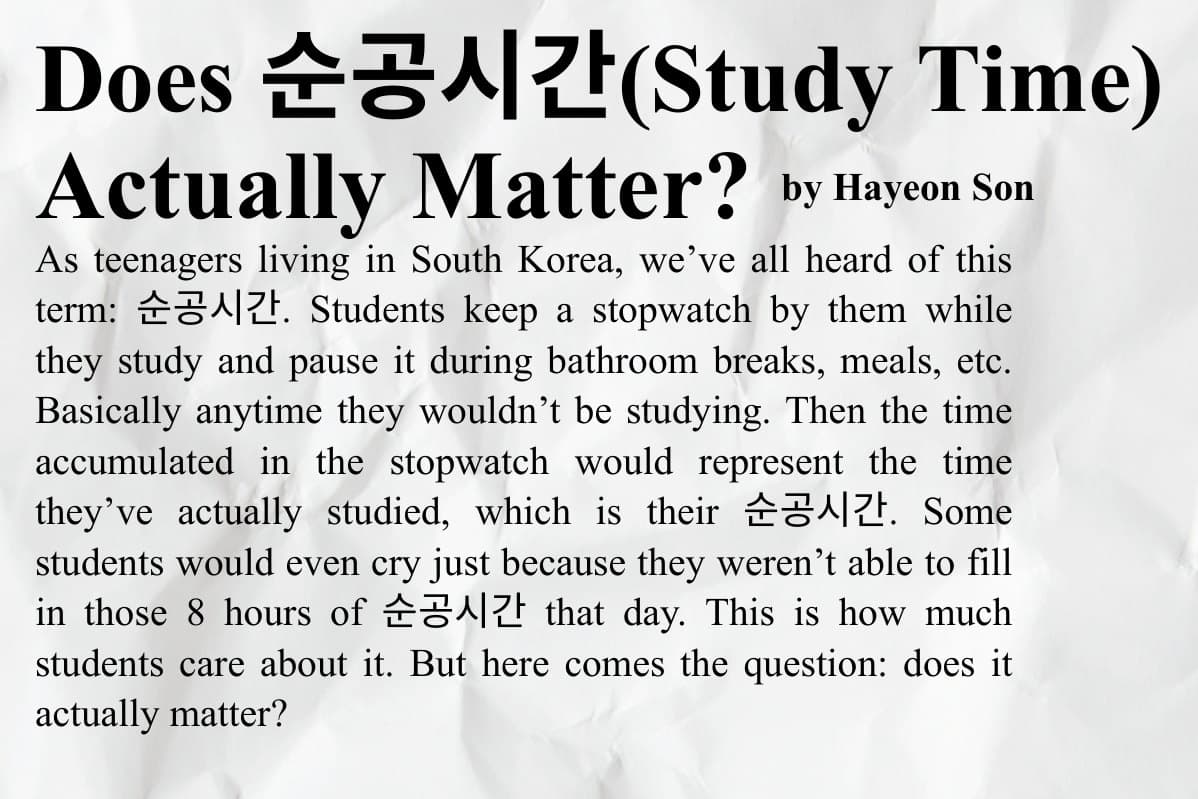
Does 순공시간 (Study Time) Actually Matter?
Students stop the clock for bathroom breaks and cry over eight hours. The correlation is weaker than expected.
Hayeon Son/Mar 2026
More from Public Health & Science
Neuroscience: Understanding the Human Brain
Billions of neurons, electrical and chemical signals, and what studying them may teach us about being human.
Yebynn Son/Sep 2026
More Than Just a Summer Nuisance
Why only females bite, why the bite itches, and why mosquito prevention is a small part of protecting community health.
Yena Seo/Sep 2026
How Exercise Helps Build Stronger Bones
Bone is living tissue. Three sessions a week at a decent intensity, and it remodels itself around the load.
Hyunji Song/Jun 2026
How to: Fix Yourself
CRISPR is a molecular scissor. It won a Nobel in 2020, treated sickle cell in 2023, and edited embryos in 2018.
Hayeon Son/May 2026
How Dreams Affect How Deep We Feel We Sleep
Brain-wave activity does not match the feeling of deep sleep. The dream does.
Hyunji Song/Mar 2026
Does 순공시간 (Study Time) Actually Matter?
Students stop the clock for bathroom breaks and cry over eight hours. The correlation is weaker than expected.
Hayeon Son/Mar 2026
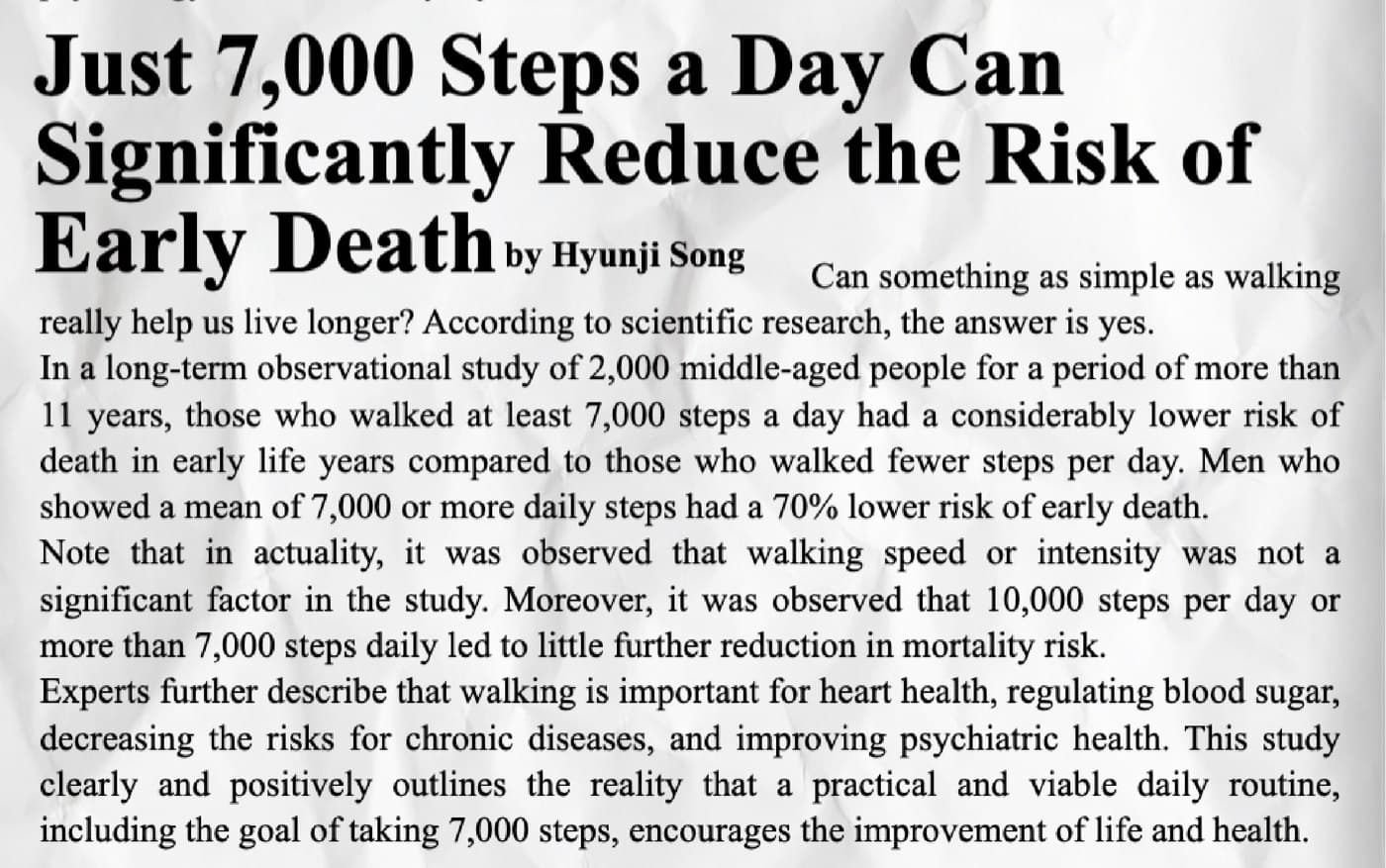
Just 7,000 Steps a Day Can Significantly Reduce the Risk of Early Death
Two thousand middle-aged people, eleven years, and a 70% lower risk. Speed turned out not to matter.
Hyunji Song/Feb 2026